
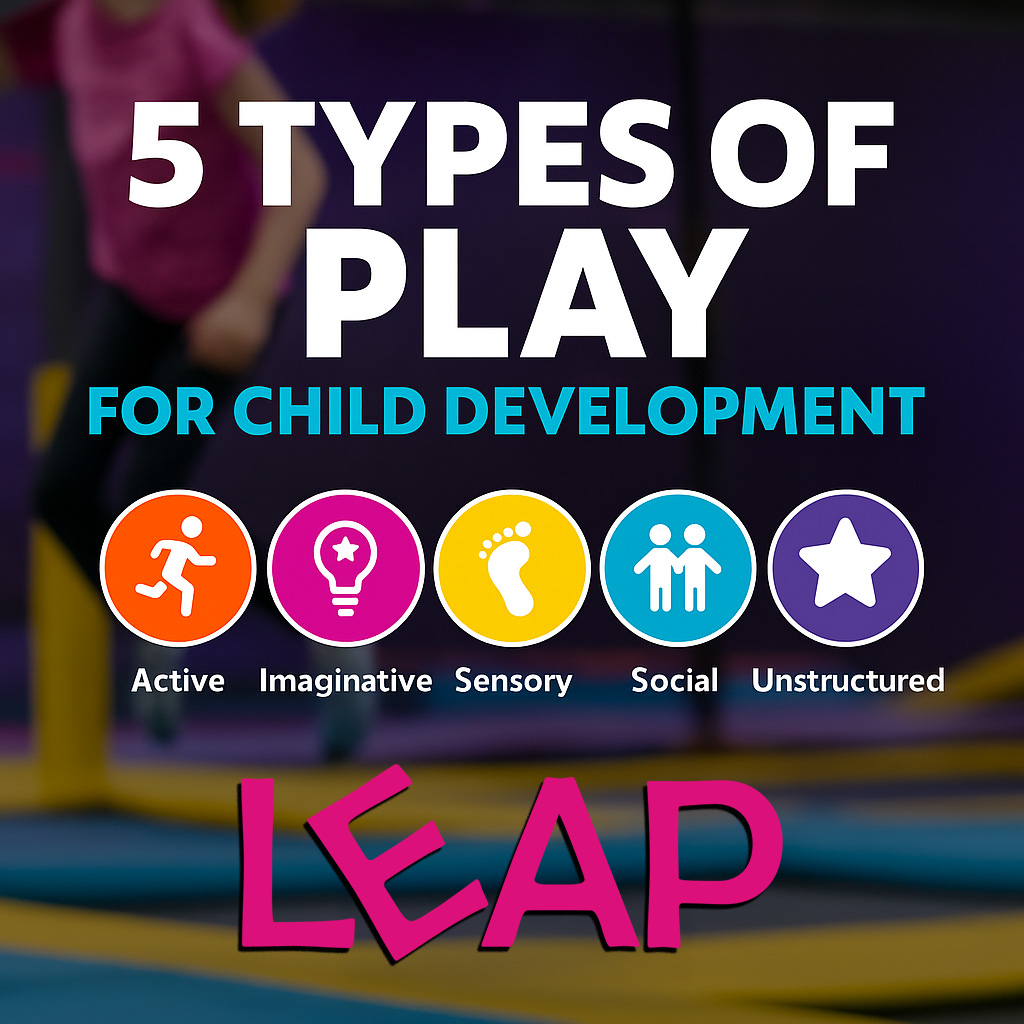
At LEAP Trampoline Park, play is at the heart of everything we do—but not all play is the same. There are five distinct types of play that are crucial for healthy childhood development: Active, Imaginative, Sensory, Social, and Unstructured. Each offers unique benefits, and the best environments for kids are those that blend all five.
Let’s take a closer look at what makes each one important—and how LEAP brings them to life.
1. 🏃 Active Play
What it is:
Physical movement that gets the heart pumping and the muscles working. Think jumping, running, climbing, and tumbling.
Why it matters:
Active play helps develop gross motor skills, builds strength, and improves coordination. It’s also a proven way to boost mood, improve sleep, and build lifelong healthy habits.
How LEAP supports it:
From wall-to-wall trampolines and ninja courses to climbing walls and dodgeball arenas, LEAP is a paradise of movement. Kids don’t even realize they’re exercising—they’re too busy having fun!
2. 🧠 Imaginative Play
What it is:
Pretending, role-playing, and storytelling. It’s the kind of play where a cardboard box becomes a spaceship, or a kid becomes a superhero saving the world.
Why it matters:
This kind of play stimulates creativity, critical thinking, and emotional understanding. It’s essential for cognitive development and helps kids process their world in a safe, expressive way.
How LEAP supports it:
At LEAP, the sky isn’t the limit—it’s just the beginning. Whether they’re pretending to fly, leaping into outer space, or reenacting their favorite comic book scene, kids use every jump as a launchpad for their imaginations.
3. 👣 Sensory Play
What it is:
Engaging the senses—touch, sight, sound, balance, and motion. Think of the feel of the trampoline, the rush of air while jumping, and the sounds of bouncing and laughter.
Why it matters:
Sensory play is crucial for brain development and helps children regulate emotions and understand their environments.
How LEAP supports it:
The LEAP experience is a full sensory immersion. From the bounce beneath their feet to the glow of lights during After Dark events, every detail is designed to spark curiosity and sensory exploration.
4. 🤝 Social Play
What it is:
Playing with others—making friends, sharing, taking turns, and building teamwork skills.
Why it matters:
Social play develops empathy, communication, and conflict resolution. It teaches kids how to navigate relationships and work as part of a group.
How LEAP supports it:
Our group attractions—like trampoline dodgeball, foam pits, and team-based ninja challenges—encourage interaction and collaboration. LEAP is also a hotspot for birthday parties, field trips, and team outings, giving kids a natural way to make connections.
5. 🎨 Unstructured Play
What it is:
Free play with no set rules, instructions, or goals. Kids take the lead and decide how, where, and what to play.
Why it matters:
This form of play fosters independence, decision-making, and confidence. It allows kids to follow their curiosity and develop problem-solving skills.
How LEAP supports it:
At LEAP, there are countless ways to play—and no one right way to do it. Kids can explore different areas, invent their own games, and create their own fun on their own terms.
The LEAP Difference
We’re more than just a trampoline park—we’re a launchpad for lifelong growth. Whether your child is a high-energy jumper, a deep thinker, or a creative soul, there’s a space for them at LEAP.
Come see how the power of play can elevate your child’s development, one bounce at a time.